Outside Source
Boxer, Jiu-Jitsu black belt, and fearless MMA professional, featherweight Jeff Curran has faced some of the toughest opponents in the fighting world, in events like Pride FC, UFC, WEC, and Strikeforce, totaling more than 50 professional fights.
A student of the respected master Pedro Sauer, Curran gives back everything he learned at his Jiu-Jitsu academy in Illinois. His learning as an athlete and fighter has been a vital factor in the growth of his submission-only Jiu-Jitsu event, with a simple and powerful motto: “Athletes first, always.”
At 48 years old, the MMA “Big Frog” fought from 1998 to 2016, and told GRACIEMAG.com what he has learned, and taught, as the organizer of the Jeff Curran Invitational (JCI) event.
GRACIEMAG: What was the most valuable thing you learned from your master, Pedro Sauer?
JEFF CURRAN: I have had many big lessons I have learned from Pedro Sauer. But one that always comes to my mind when I am teaching or going through hard times is that things can always be worse.
When was that?
Back when I was a purple belt. I was visiting him in Salt Lake City at his academy, and I was going through some financial troubles, I was struggling with my work/business/athletic career as well as some student issues. After knowing what I was going through, Pedro asked me to train and tapped me God knows how many times and tossed me all around the mat. I was in tears because my confidence had been stripped away from me and on top all I was going through. Anyhow, in true Pedro Sauer fashion he put his arm around me as we sat tired on the mat and he said “Just remember Little Jeff: things can always get worse”.
A powerful lesson, indeed…
Yes. It was a very good moment for me after I had settled down because I thought deeply about that comment. It also made me laugh so it snapped me out of my current mental state and into a fresh one.
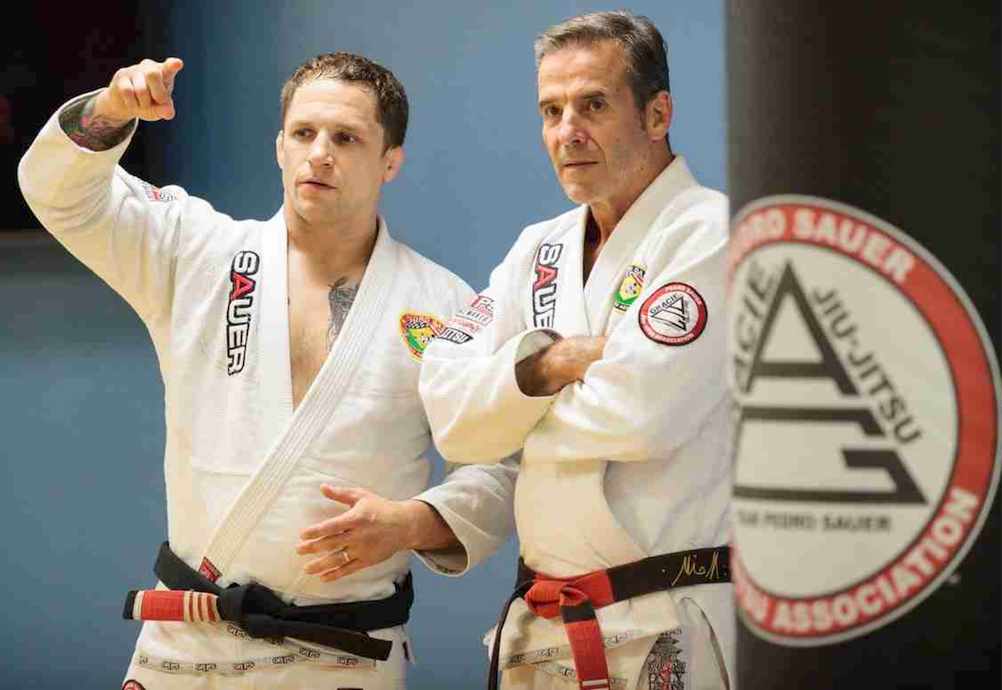
Jeff “Big Frog” with master Pedro Sauer.
You have around 55 MMA fights in your career, right? Did you fight big tournaments with the gi, as well?
Yes. I had many memorable moments in the Gi. Also during my purple belt days I was set to face a former teammate who was more mature than me and had been having more formal training. It was the semifinals of the 2000 Pro Ams in Raleigh North Carolina, something like that. I was so nervous yet confident. Most on the team thought I was in over my head but I locked in and was able to put him to sleep in front of his new professor and of course in front of Pedro. That was me realizing that I was capable of stealing the show no matter who it was. My confidence went way up and that fueled that next charge in my early career.
Which fight marked you the most? Maybe the one that taught you the most lessons?
This is a good question and I could choose from 50 different MMA fights that ring a bell but I had a fight against Ryan Ackerman for the Shooto America’s belt back in early 2000’s. I trained so hard, I trained with all my top guys. That hurt me because I didn’t catch those guys in triangles much in training because they knew my game. So, after I caught the first triangle at the end of round 1 and he survived, I stood up and I could barely walk. I was so fatigued from squeezing the triangle. I continued to catch him multiple triangles throughout the fight and now the chokes were weaker and weaker as the time went on. I won the Belt via unanimous decision, however the big win was to realize that I should have been sharpening my offense on lower level guys who don’t want to tap easy. It taught me to really find value in all your training partners.
And what would be the differentiating factor of your event, JCI?
There is a few things that are unique to JCI ruleset. First of all we have regulation time of 7 minutes (10 for title fights and main events) and 3 minute OT for regular bouts and 5 minute OT for title fights/main events. At the end of regulation, the referee will flip a coin to determine who gets to choose the starting position of the OT round. Top (inside closed guard), Bottom (playing closed guard), Neutral (from the feet).
At the end of regulation if there was warmings for stalling during the match, the referee has the choice to give the coin toss to your opponent. This keeps people from stalling because they don’t want to lose a 50/50 chance at picking the start position.
And what happens then?
Well, after the OT round ends, if there is no winner, the 3 mat side judges score only the OT round to determine the winner. Threatening submissions and mat dominance are key to victory for the most part. So far, we have had great success with these rules but myself and my referee staff meet regularly to discuss little nuances that could make the rules set and/or judging criteria more and more clear.

Your motto is “Athletes first, always.” How does this translate into practice in the tournament?
“Athletes first, always” means every decision we make is built around giving competitors the best possible experience. That starts with fair, meaningful matchups based on experience — not just belt rank. Our rules push action and create clear outcomes, so athletes always have a real chance to win. We also prioritize professionalism—tight scheduling, high-level referees, and a well-run event—because these athletes put in serious time to prepare. On top of that, we focus on presentation and exposure, making sure every competitor feels valued. At the end of the day, if the athletes feel respected and proud of their performance, we’ve done our job.”
Which event treated you best in your vast and successful career?
I really loved the WEC days. Although the staff was for the most part the same as UFC, the experience in WEC felt different. It was an entity of its own but powered by the Zuffa machine. I loved everyone from drivers/assistants all the way up the line to Reed Harris, Dana White, Sean Shelby, Joe Silva etc. And everyone in between. They were special days back then.
As an athlete, have you experienced any curious instances of mistreatment or organizational failure anywhere?
My whole purpose in my organization, the Jeff Curran Invitational (JCI) is to provide fair opportunity to the athletes. That isn’t the case in some organizations. I have felt used, taken for granted and at times even set-up for failure from a number or organizations. Fighting is a dirty business and attracts a lot of people without the best intentions unfortunately. So although it’s called Mixed Martial Arts, the martial arts respect is often left out of the equation. JCI is not a corporate machine, it’s a small tight team of people I believe in and trust and they all see my vision clearly. To put the Athletes First!
What can viewers on your YouTube channel expect?
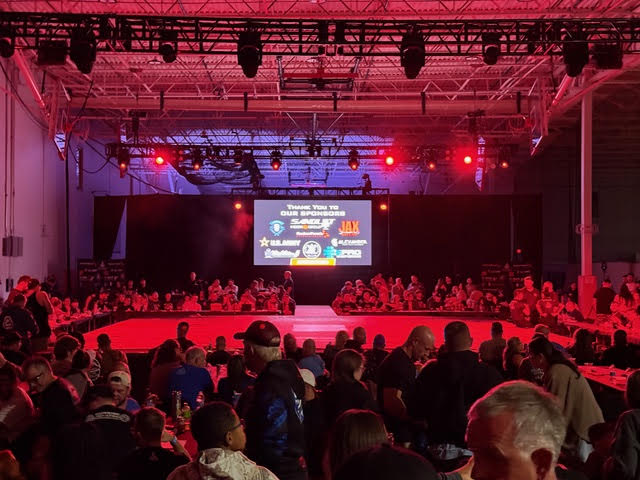
So far we have had two successful events. Our livestream is clean, our event moves forward steadily and our match-ups are awesome from start to finish. Some up and comers, some local heroes and some top of the food chain competitors. We have five title fights including two women’s match-ups and three mens. If anyone wants to get a glimpse behind the scenes before May 9th, they can watch Episode 4 of Jeff Curran: Martial Life @jeffcurraninvitational YouTube channel.
The post The fundamental Jiu-Jitsu lesson Jeff Curran learned from Master Pedro Sauer first appeared on Graciemag.
This article first appeared at Graciemag